Monday, April 8, 2019

An Abnormality, contInued

I looked over at the Captain, who was staring dutifully at his instrument display and decided to break the ice.  “Hey, so, did you feel...”

He interrupted me, “That was weird, right?”

My mind was now floating firmly in the realm of relief and confusion.  I hadn’t imagined it, so at least I wasn’t crazy.  That didn’t solve the problem that now two of us felt something that we couldn’t quite explain.

At this point, having no other better ideas about what had happened on the runway in Denver, logically my next course of action was to determine if anything was malfunctioning.  After pressing what is effectively a button that tests all flight related subsystems, the airplane returned a, “no dummy, everything is fine” indication.  I was almost hoping there was a hydraulic or flight control issue because at least that would tell me that something had caused the sudden jerk to the left.  There was nothing.  Passing through 10,000 feet, the Captain reached up to call the lead flight attendant to tell them of the planned smooth flight.  While he does this, I listen in.  

“Hey guys, we’re through 10.  Should be a pretty good ride all the way in.  And real quick, did any of you feel anything weird during take off?” The captain asked, not wanting to prompt a response.  

“Yeah, this is Jimmy in the back, I was going to call and tell you but we felt a pretty big jerk back here that we’ve never felt before.  Is everything okay?” One of the flight attendants asked.  The Captain replied that everything was fine and that we were trying to diagnose what happened.  

The problem had now left the cockpit.  At 180 mph during a takeoff, even after a thousand takeoffs, your mind is still hyper alert to changes in the norm.  During training, we often simulate engine failures and fires at the most vulnerable parts of the flight so, from a behavioral standpoint, the time when a pilot most expects a problem is shortly before lift off.  With at least one flight attendant feeling something wrong, we knew that the jerk wasn't just from hyper-vigilance.

After several more minutes of thinking about it, I asked the Captain, “do you think it was a blown tire?  That would explain both the lurch and the lack of indications up here.  I mean, it was hot in Denver, we are heavy and this is pretty much the fastest these tires are going to ever spin.  Want me to call back and ask to do a sweep?”  As silly as it may sound, unlike cars, all the aircraft I've flown do not have tire-pressure indications and thus no way to tell if one had deflated.  The Captain agreed.

Pulling back up my charts, I dialed in the Denver tower frequency.  “Denver tower, we just departed off runway 8 and think there is a possibility we blew a tire on takeoff.  Could you send ops to do a sweep to see if there is any debris is on the runway?  Most likely indications would be about the last 3000 feet.”

At approaching 100 miles from Denver, the signal was weak.  They replied, “Absolutely.  I’ll send them out immediately.  Standby for the results.  If we can’t reach you, we’ll forward the results to Kansas City Center.”

With still just under two hours to go, the Captain wasn’t going to just wait around for the results.  “Okay, so let’s treat this like a malfunction.  We’ve gone through the manuals, we’ve contacted Denver.  Instead of just wait, why don’t we call and talk to maintenance.  You take the airplane and radios, I’m going to call the company.

During a flight, all airplanes have the ability to radio a ground station and be connected to any number of agencies.  For a medical emergency, we have a doctor on call at the University of Pittsburgh Medical Center to answer any medical related questions.  We can reach them via VHF or HF frequencies at virtually any point on the globe. We don’t often use these communications channels, but in this instance, when it’s better to talk about it rather than text about it through our integrated messaging system, we call.

For the next 20-30 minutes, the Captain is on the line talking with maintenance, dispatch and our operational control.  I listen in on the backup radio while I am handling the en route radio, essentially flying the airplane solo.  It is on these days I am so happy there are two of us here so that we can divide and conquer the problem.

During the time the Captain  is talking to the Company, I hear back from Air Traffic Control that Denver tower found no indications of anything amiss on the runway.  That is both a relief and increases the frustration.  SOMETHING caused it. I tell the Captain the news which he then relays to maintenance.  Shortly after, I hear him thanking everyone on the line and joining me, mentally at least, back in the cockpit.

“So they have no idea either” he says.  “They’ve pulled the sensor data the airplane sends them and are seeing nothing abnormal.  Maintenance offered to have mechanics us on landing to inspect the gear before we taxi but in order to do that, we have to be an emergency aircraft.  So, when we get into the final center airspace, we declare an emergency.  They don’t think anything is wrong but out of an abundance of caution, if something IS wrong, it’s better to have the fire trucks at the runway than in the firehouse.  Do you agree so far?”  I nodded, of course I did.  “Until we can rule out that something is NOT wrong, we operate under the assumption that something is.  Since the only thing I can think of that wouldn't show up anywhere is a blown tire, we run the emergency procedure for that.

“One last thing.  On the lead-up to the landing, I’m going to be busy doing a lot of the big picture things.  I’m confident in your abilities so, from here on out, you’re flying and you’ll do the landing. Are you okay with that?”

All pilots are confident in their abilities.  It’s part of the type-A egomania that accompanies most of us.  Getting a comment like that in the lead up to landing on possibly flat tire or malfunctioning gear, is a real vote of confidence.  “Of course. I’ll start reviewing the manuals.”

“Sounds good, I’m going to bring the flight attendants in the loop and let the passengers know,” he says so calmly that you’d think he's done this hundreds of time.  No time to reflect on that, time to prepare.

Our iPads contain a wealth of information.  One of the manuals contains a “best practices” for every possible situation anyone could think we would encounter, to include several pages on landing gear malfunctions.  And that’s where I spent the remaining time at cruise.

After over an hour and a half of thinking and talking and thinking and talking and thinking, we finally are handed off to the final center controller before descending. The frequency is congested with dozens of mid-day flights transitioning the airspace or climbing or descending into it.  Ops normal for a weekday afternoon.  Time to set things in motion

“Center, we are checking on at flight level 350 and are declaring an emergency.  We will require fire trucks to meet us at the runway upon arrival and request the longest runway available.”

Monday, January 7, 2019

An Abnormality

“Ladies and Gentlemen, from the flight deck, we are number one for takeoff.  Two hours and twenty minutes en route to Atlanta once we are airborne.  Flight Attendants, please prepare the cabin for departure.”  I switch from PA to the cabin button on my audio control panel as I wait for the confirmation that everyone is seated in the back.

“Okay, while we wait, I see runway 8 on the pavement, runway 8 in the box.  We are on the EXTAN5 departure, SHAYK transition, first fix is KIDNG.  We’ll LNAV out there up to 23,000 feet and no airspeed restrictions.  Any questions?” the captain briefs as we approach the end of the runway.  I shake my head as a bell rings in the cockpit to let me know the flight attendants are calling to confirm they are ready.

“None.  Okay, they are ready in the back.  Before take-off checklist...”  I finish up the last checklist, flip the last few switches and advise the tower we are ready to go.  We pull onto the over 2 mile long runway in Denver, conduct a last minute sanity check, and before we start pouring jet fuel into the engines at over 3000 gallons per hour, he asks if I’m ready to go.  “Yup,” I reply, “let’s go home.”

The throttles are brought to life.  Moments later, we can both hear and feel as the engines reach takeoff pitch; the deafening sound of rushing superheated air exiting the engine and interacting with the relatively cooler atmosphere combined with the feeling of the deep mechanical whirring of the turbines as they spin at nearly 15,000 RPM.  Still, with all that noise and sound, the airplane only sluggishly accelerates down the runway.  At 5500 feet above sea level, the airplane will need to be traveling over 180mph before there is enough air flowing over the wing to create adequate lift.

“V1,” I call out.  We’ve reached the “decision speed.”  From here on out, there is a very short list of things that are going to keep us from taking-off, so short that even engine fire or failure isn’t on it.  At V1, there is no longer enough runway to stop so in 99.9% of instances, it is actually safer to take-off and come back and land.  Shortly after V1 comes Vr and the call-out, “Rotate.”

The Captain lifts the nose off the ground until we are pitched about 6 degrees above the horizon, waiting for the wings to fly.  It is always at this moment I am most in awe.  At over 180 mph, we just wait for the airplane to fly while it is balancing on its rear tires, nose gear raised six feet in the air. Normally, your butt feels the subtle change of direction as the 180,000lb jet gives up the earth to join the sky.

A sudden jerk to the left.  What the...  My eyes dart from my instrument screen to the Captain.  He’s staring straight ahead.  He moves control wheel abruptly to the right to keep the wings level.  He steps on the rudder to bring the airplane back to the centerline.  With the nose still pitched in the air, I will the airplane to fly.  Less than a breath later, the familiar feeling of liftoff.  Confirmed by the instruments, “Positive rate,” I say to the Captain who then commands the gear to come up.  And we are off.

My senses are heightened thanks to the sudden squirt of adrenaline into my blood stream.  We sit in silence for the first ten minutes of the flight saying nothing to each other than the required checklists and radio calls.  My mind searches for something to justify what happened in that brief second on the runway.  Maybe I imagined it?  Maybe the Captain hit a bump or swerved to avoid a deer.  No that’s stupid.

I look over at the Captain who watching his instrument display as we climbed eastward away from the Rockies and decided to break the ice.  “Hey, so, did you feel...”

He interrupted me, “that was really weird, right?”


To Be Continued


Monday, December 17, 2018

The Routine

Sitting in a Starbucks in Downtown Milwaukee with a hot cup of coffee, I look out the window to see the city waking and getting started.  Groggy businessmen and women come through the door, bundled up to guard against the cold, and greet the baristas with warm familiarity.  “Your usual?” asks the young man behind the counter.  The businesswoman, purse and briefcase in hand, smiles, looks up to the overhead speaker playing Christmas music, and orders a Christmas pastry as well.

This routine plays out in seemingly every big or small city in the Western Hemisphere.  Just as much as it is part of their morning routines, it is part of mine.  When I don’t have to fly in the morning, I find the nearest coffee shop to sit down with a cup of coffee and watch the world awaken.  From capital cities of Charleston, WV to Sacramento, CA; from the mountains of Guatamala City, Guatamala and Salt Lake City, UT to the coastal port cities of San Juan, P.R and Seattle, WA; from the rainforests of San Jose, Costa Rica and San Salvador, El Salvador to the deserts of Albuquerque, NM and Phoenix, AZ; from the sprawling metropolises of Mexico City, Mexico and New York City, NY to the comparitively minute downtowns of Richmond, VA and Kansas City, MO, it always the same.  People,struggling against the inertia of far too little sleep, seek the warmth and energy promised in a small cup of liquid.  They are off to meetings, the airport, or coming in from a morning run.  They buy a single cup or carry out an order for the whole office.  The only difference I can ever tell is the language being spoken and the climate it is spoken in.

From my comfortable corner leather chair near the warmth of the gas fireplace, I sit and read.  It is then that I realize, man, I haven’t blogged in awhile.  When I open the website, it hasn’t just been awhile.  It’s been a year and a half and that’s the problem with routine.  As I sit here and watch the world get started, I enter my own routine that has somehow pushed writing to the far fringes.

Not making time is not the only problem.  My job has become a routine of its own.  For the vast majority of trips, everything goes as planned.  As compared to my regional airline, I’ve never once been involved in a flight cancelation.  I’ve never had maintenance delay more than 30 minutes.  I’ve yet to have to divert for weather.  I’ve never “timed-out” although I have been close.  There is very little chaos, very little confusion, very little anything interesting.

It is for that I apologize.  I know people have really enjoyed reading my blogs almost as much as I’ve enjoyed writing them. There have been less than a handful of situations that have even remotely warranted addressing in a blog in the last 1.5 years and I promise to share them here in the new year.  For everything else, it’s just been routine.


Friday, June 30, 2017

There's no place like home, there's no...

Darkness.  The sweet, chocolaty blackness of my dreams surrounds and soothes me like a warm blanket on a crisp winter morning.  Cutting through the haze of comfort, a bell chimes.  It's slow and soft at first but with every ting, louder and faster than the previous, the silkiness of the moment becomes agitated and begins to drift....

My eyes open.  Where am I? I think to myself while searching the darkened room in an effort to survey my surroundings.  Am I in Seattle?  Mexico?  Miami?  The last of the blackness fades and I discover myself laying in a twin bed.  It's Atlanta, the room I've rented for use when I can't get home to St Louis or have to come to work a day early.  It sure beats spending money on a hotel room.  Do I have a trip today, I think to myself as my attention is once again drawn to the loud chimes in the room.  It's not my alarm.  It's a phone call.  Oh, I'm on call.

"Hello?" I strain into the phone trying to feign alertness.  It clearly hasn't worked.  I can hear confusion in my own voice. The woman on the other end relays the bad news.

"Mr. Boyes.  There is a trip on your schedule," she informs me and drones on about details that almost put me back to sleep.  They've had an equipment substitution.  A MD88 broke somewhere and they are using a spare 737 and reserve crew to cover it.

I'm not flying to any exotic location today. I'm not crossing the majestic Rocky Mountains nor am I going to fly into the deep blues of the Caribbean. Birmingham, Alabama.  Today, I get to be the 'Bama shuttle, the 30 minute wonder.  Well, the 30 minute wonder times 4.  I get to do the Atlanta to Birmingham round-trip, twice. And, today, that is fine with me.  It's the last day of 6 on call. I just want to go home.

****

"Climb checklist," the captain announces as we both reach to flip switches and press buttons.  

"Climb checklist.  Altimeters:" I call out awaiting his response.

"Standard, cross-check."   He says, pointing at all three altitude measuring devices in the airplane. 

"Climb checklist, complete."  I say putting the checklist away and, in a single motion, grabbing my coffee and bringing it to my lips. It's leg 3 and we are on our way back to Birmingham for the second time.  The cruise portion of the flight is short, but long enough for me to reflect on how smooth everything has been.  I look down to check my watch.  Even with the long line in Atlanta on the first flight, I could still make my commute flight home.  No granola bars or overpriced airport food or cold leftovers for dinner tonight!  I am looking forward to a hot, home-cooked meal with my wife.

A short 15 minutes later, we are bouncing through the clouds getting vectors for landing.  I can't but help but notice the weather has appreciably worsened compared to the first trip of the day.  A tropical storm is making landfall on the Louisiana/Texas border but its squid-like rain bands haven't made it all the way out to central Alabama.  At least, they hadn't as of almost two hours ago.

It's quiet on the radio.  The voice of the controller cuts through the silence infrequently and only to give us instructions.  It appears as if, at least for the moment, we are alone out here.  Birmingham approach frequency is the yin to Atlanta's yang. "Cleared for the approach and contact tower," the controller tells us.  I repeat it back and am reaching to change the radio's frequency when she interrupts the silence again. "Oh and before you go..."

Usually statements like that are innocuous.  Usually it's followed by some kind of advisory to let us know it's bumpy ahead or previous airplanes have reported wind shifts, or even asking for how flight conditions are at our present altitude.  But this is "Go Home Day."  It's the pilot's version of break a leg.  A good pilot never says, "hey guys, it's go home day!  It's been a smooth trip and this will be more of the same!  Maybe we'll get in early."  Many pilots even hesitate to think about it being Go Home Day until they're are sitting on their front porch having a beer.  If you do, you risk summoning the Go Home Gremlins and they are vindictive little bastards.  Some of the weirdest things that have ever happened to delay me have happened on Go Home Day.    And it's not just me.  One particular pilot has made a comedic video about a day in the life of pilots.  Fast-forward to the 3:00 mark for the example of Go Home Leg.

I'm not sure what the Captain or I did to summon the Go Home Gremlins, but they showed up nonetheless.  "Oh and before you go, multiple tornadoes have been reported west of the airport.  Have a good day."  I didn't immediately respond.  Did I hear her correctly?  

"Um, roger...did you say tornadoes?"  I ask looking over at the Captain.  "Did she tornadoes?"

"That's affirmative.  Storm spotters have spotted tornadoes about 10 miles west of the airport."  She repeats almost annoyed that I bothered to clarify her previous statement.  We are 5 miles east of Birmingham flying west at 160 mph.  That's nearly 3 miles every minute.  Quick mental math puts us 4-5 minutes from them.  It's even closer if they are moving our direction. 

"Alright, well, could you at least tell us what direction they are moving?" I ask her trying to help the Captain figure out if we just need to get the hell out of here.  She replies back that they are moving to the north, away from the airport.  I look to the Captain, and in an agitated tone say to him, "Christ, I'm glad they waited until we were almost on top of them to let us know.  Thanks for the 'heads-up'."    
Just as I finish my thought, we break out of the clouds and survey the airport.  The surface is clear.  There are some low clouds off to the north and a rain shield west of the airport obscuring the normally-visible downtown buildings.  One last peek at the on-board radar shows nothing of serious concern within 10 miles, so we make the decision to land and do so uneventfully.

After a brief wait for the ramp personnel to come park us, we arrive at the gate and I pull out my cell phone to check the radar.  I immediately see the cell to the west and, as described, it is moving to the north and away from the airport.  In fact, most of the severe weather is west of the city, moving north.  Slightly relieved, I look over to the Captain and show him my radar.  He takes a quick glance and in stands up to greet the disembarking passengers, "Well, let's board up and get out of here.  I don't want to be here when those things move this way."  

Quickly, we both work through our duties to configure the airplane for the return trip to Atlanta.  Unlike the more relaxed demeanor we both displayed before the previous 3 legs, this time, it was all mostly done in silence.  We finished our tasks and all that was left was to finish boarding the airplane. There was palpable tension throughout the airplane but everyone pretended to ignore it.    

The flight attendants, who were just starting their day on this particular leg, told us they were in the gate area when a tornado announcement was made before we landed.  They were informed that they were not currently going to the shelter but where to go if they had to shelter.  As people boarded, everyone tried to make small talk and treat this as every other normal flight but, deep down, I could feel the nerves and prying eyes as more people than usual looked into the cockpit.  Who are these guys?  Will we be safe?  

One of the questions I get the most is, "have you ever been afraid in an airplane."  Of course, the answer is always "no."  At no point in my career have I been afraid for my life, which I know is the question they are asking.  I've been afraid of getting lost when I was a brand new private pilot.  I've been afraid of students flying solo for their first time as instructor.  And I've been afraid of not passing check-rides as an airline pilot.  Not once, however, have I ever been afraid that I wouldn't make it through the day.  Today, was no different, but for the first time, I felt a new kind of anxiety and it happened right after the boarding door closed.  

The gate agent handed us our paperwork, gave us the obligatory "have a good flight," and left to close the boarding door.  I pulled out my cell phone one last time to check the radar.  A new purple box had formed southwest of Birmingham and was pointed right at the city.  I clicked on the box and read it to the Captain.  "A tornado warning has been issued for Jefferson County.  A tornado producing storm was located..."  

"Where is it?" the Captain asks, interrupting me.  I tell him it looked like it is about 10-20 miles south of us and moving towards us at 30mph.  "Alright, well, we will be long gone before it gets here," he says less confidently than he has all day.

I feel my heart rate increase.  I just wanted to get in the air.  Once airborne, we would be fine. Tornadoes and their associated systems are small.  At between 375 and 490 mph (our climb and cruising speeds), it's easy to get away and around them.  While we are on the ground, there isn't anything we can do.  If we don't get out of here before the storm gets here, the airplane could be damaged requiring inspections.  More generally, I just don't want to be around when there are tornadoes.  "Alright, call for taxi" he instructs.  I more than gratefully comply.  

"Taxi to runway 24 via echo.  Just got off the phone with Atlanta.  Due to flow, the best wheels up time we could get you is 10 after the hour.  Time now, 38," ground control advises us.  Like a punctured balloon, I feel the wind rushing from my lungs.  

I look over at the Captain as he stares straight ahead, face tense.  "You've got to be shitting me," he let out in frustration.  "First they slam dunk us head first into tornadoes and now won't even fight to get us a better wheels up with more inbound?  Send a message to dispatch and then call ground to see if we can get some priority."

To: Dispatch
TORNADO WARNING SOUTH OF BHM.  WHEELS UP IN 30 MINUTES.  CALL ATL AND GET PRIORITY PLZ.

I hit send.  My next call was Birmingham ground.  "Ground.  Could you give Atlanta a call and get us some priority.  Another tornado warning just popped up south of here and we'd really like to not be here when it gets here."  There was a brief pause before they replied with a short "standby."  

The silence of the next few minutes is painful.  While I was doing as he asked, the Captain had pulled up to the runway and had been using the on-board radar to find a good path out.  The winds won't allow us to take off away from it all, so we are going to have to take off west toward the weather before turning back to the east.  And it's my leg.  I reach into my bag and grab a piece of gum, needing something to do so I could stop fidgeting.  

The radio comes alive again.  "Okay, the best I can do is 50.  Be ready to go right at that time."  Ten minutes waiting is better than 30.  It would undoubtedly be a long ten minutes though.  Once again, we return our gaze to the on-board radar as the Captain speaks up. "Okay, We'll decide for sure once we line up, but right now, let's see if we can make an immediate left turn back to the east."

As shocking as it sounds, turning toward the incoming weather really is the best course of action.  The storm is still an uncomfortably comfortable distance to the south.  Looking to the north and west, a grey curtain of rain from thunderstorms moving to the north obstructs any possible exits  We reconfigure the takeoff power to full power and wait the last few minutes until our window opens.

 I look at the clock. Three minutes to go. "Check your phone one more time for me," the Captain says.  A quick check raises my hopes. It's still south and would continue to be by the time our wheels leave the ground.

Right on schedule, tower clears us for take off. The Captain aligns us in the center of the runway and gives me control of the airplane. "Your controls. Let's go home."

I advance the throttles.  The engines, having waited patiently for this moment, let out deafening roars so loud that it can be felt deep within my chest. Beneath the roaring, the mechanical groan of the turbines resonates throughout the cabin and we begin to rumble down the two mile long concrete strip.  At 150 mph, I pull back on yoke, lifting the nose into the air.  A second later, ,we are airborne.  As I turn back back toward east and get the aircraft pointed in the direction of Atlanta, I look outside and see breaks in the clouds and blue skies beyond.  I reach up, turn the autopilot on and smile to myself.  Tornadoes.  Well played Go Home Day, well played.


Thursday, May 4, 2017

Ground School

I walked out of the smaller of the two cafeterias in Delta's Global Headquarters and back to class on the 3rd floor of the training building.  Still soggy from the hour in the pool and tummy full of turkey, I made sure both my bottle of water and bottle of soda were at the ready to stave off any afternoon sleepiness.

It was Day 2 and Death By PowerPoint had commenced.  At all airlines across the country from the smallest regional operators to the largest international carriers, the first section of training is known as "Indoc" or indoctrination.  Just like at most companies, it is the most bland of administrative exercises to include setting up your benefits and meetings with supervisors and various company departments as an introduction to your "piece of the puzzle."  Aside from the occasional guest speaker, we all settled into our desks, notepad at the ready to ingest everything possible about the operations side of the airline.  

In order to get certified by the FAA to be an airline, there are specific topics that must be covered in Indoc.  They include...everything.  There are dozens of manuals that detail how the airline operates, most of them non-specific to any single airplane, and we had to go over every single chapter of every single manual in slideshow format.  

So, we sat for hours in class class going over the hundreds of chapters that comprise our "operating license" and other airline specific manuals.  The following Thursday, a mere 8 days from the first day of class, we were sent home to study on our own.

The company has to give new pilots a minimum of a week to go over the computer-based training materials specific to each airplane.  For me, with the wedding approaching, in order to fit me into the schedule and accommodate the life event, I was given almost a month.  Upon returning, there were 3 class days of review to go over anything we may not have understood from the self-study and then a test. Aside from the two hours of studying every night, I often stayed in the building late to work on "flows."

While every airplane essentially flies the same, the supporting infrastructure is vastly different.  In the 737, an aircraft designed in the 1950s, the systems logic surrounding the aircraft is very different from the ERJ, an airplane designed in the late 90s.  If all I had to do was sit down in my seat at the runway and then get out once we landed, the training course would be simple and take a few days.  It's everything else, the mundane preflight and taxi tasks that verify the proper operation of every component and system of the aircraft that takes a lot of time to memorize.

One of the nice things about working for a large, safety-minded corporation, is the money they invest in training.  There are 4 levels of training devices available for my use in preparing me before I step foot into the real jet.  The first, and most basic, is the "Paper Tiger."  In each classroom, attached to the walls are posters of the cockpit.  I had little use for this since they also sent us home a copy of those posters to use while studying.

The next step up is a sci-fi like computer trainer where most of the cockpit is on touch screen monitors oriented as if it were an actual cockpit.  This is where I spent most of my time studying.  You could touch the screen and actually see and hear what happens. This it the area where you iron out your flows.

A flow, you ask?  A flow is a pattern in which you move your hands and eyes and is different depending on the task you are completing.  For example, before landing, my left hand sweeps from the overhead to the throttles (Igniters-on, gear-down,  flaps-set, speed brake-armed).  The after starting engine flow is a circle shape (Electric-transfer, probe heat-on, anti ice-as req, air conditioning-on, APU-as req, subsystem test-complete).  Once the flow is complete, it is quickly verified by reading from the checklist in the off-chance something in the flow wasn't completely normally.

The feedback in this "Procedures Trainer" is immediate.  I spent hours practicing getting into an airplane that was completely shutdown and getting it ready for takeoff one flow at a time.  At first, you read off the manual.  Read a step, do a step, watch what happens.  After doing that once or twice, you begin to hear and see what it is like to start up an airplane's systems.  After a few tries, you start seeing a patterns and before you know it, what was taking an hour to do is now only taking 15 minutes.

The next step up is a full cockpit mock-up sitting in a room and by full-mock up, it looked like someone just sawed the front end off of a 737 and put it in a room.  You could actually "fly" this flight training device, albeit not very easily.  Unlike the Procedures Trainer, you could have a more realistic experience.  Following 6 days in these trainers, an evaluation was completed to ensure I was familiar enough with the generic day-to-day procedures to adequately move on to the simulators where I finally got to learn how the ol' girl flies.

Following two weeks in the full-motion simulators, I passed two check-rides and was ready to finally take on the task of carrying passengers.


Wednesday, February 15, 2017

Choosing An Aircraft

When a pilot shows up to training at a major international airline, he shows up with an open mind. It's not because of all the future adventures he's going to take, but primarily because when he arrives for his first day, he has no idea what or where he is going to fly.  It isn't until then does the company release to the new pilots which aircraft and domiciles are available.

As compared to my previous airline, instead of only having one aircraft to choose from, there were 9.

Airbus 320 Series
Airbus 330
Boeing 777
Boeing 767-400
Boeing 757
Boeing 747
Boeing 737
Boeing 717
McDonnell Douglas 88/90

With that long list of airplanes, how could I possibly choose?  Well, fortunately or unfortunately depending on your perspective, that list was shortened for me when I showed up for Day 1.  Of the airplanes on the list, the wide-body airplanes (two aisles instead of one), the ones that normally fly long international flights that cross oceans are very desirable.  Only the most senior of pilots both First Officer and Captain, fly those.  So, it was easy to cross B747, B757, B767, B777, and A330 off the list.  It is going to be 10 years until I see the inside of one of those as a pilot.  That left me with just the narrow-body aircraft to choose from.  So, let's begin!

MD-88/90
Image result for md88 type rating

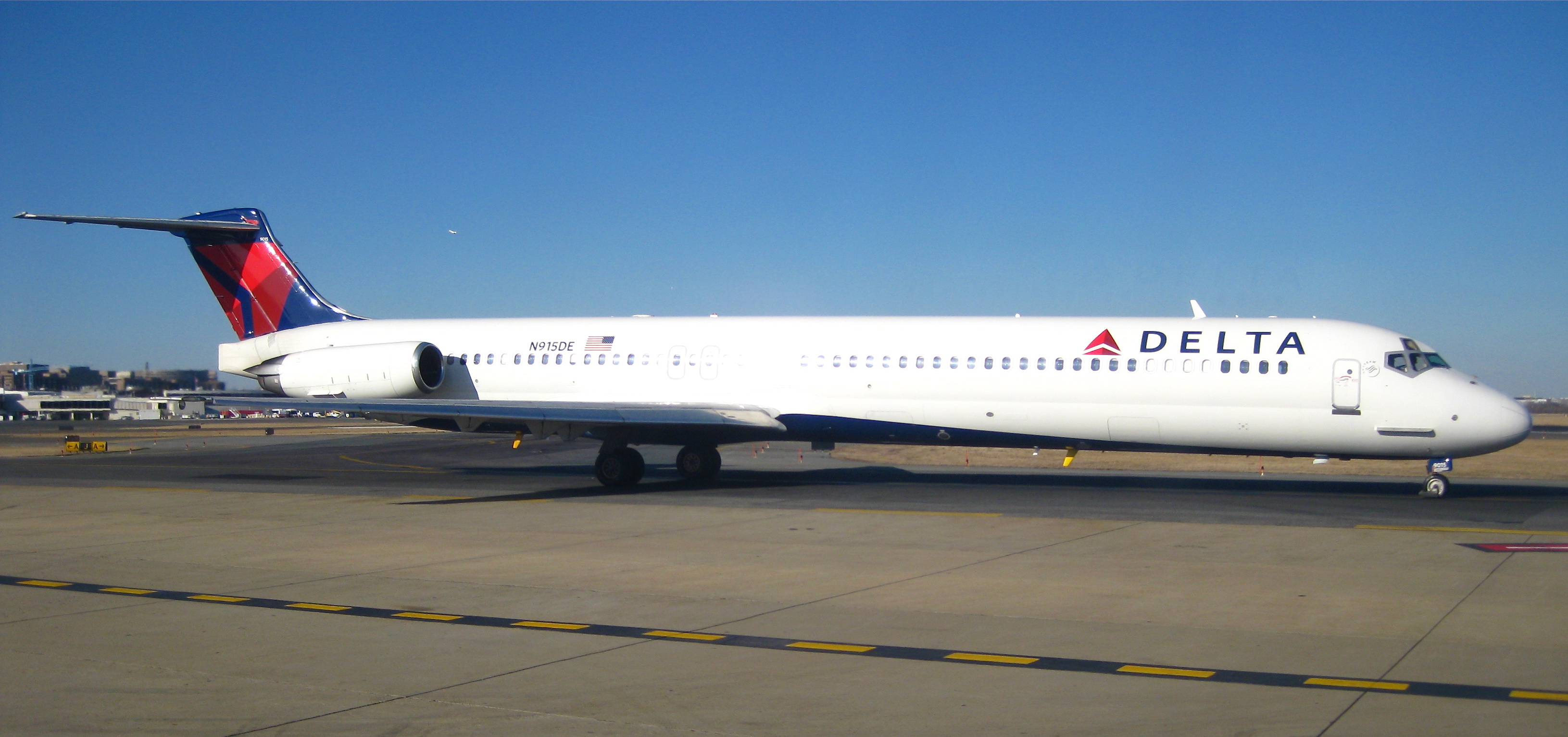
The MD-88/90 aircraft are very unique and easy to spot taxiing around an airport.  Sporting a "T-Tail" design with two large tail mounted engines and very long fuselage, the 88s dwarf their regional jet cousins.  From a passenger's perspective, it is immediately clear when you walk into the cabin that you're in an older generation aircraft.  While the seats and interiors have been completely refurbished and redesigned over the years, the aircraft features an iconic 3 by 2 seating configuration in economy and noticeably older overhead bin doors and flight attendant/over head lighting buttons.  If you have a seat behind the wing and near the engines, you'll also notice that it is a much louder airplane than the newest generation passenger aircraft.

At Delta, these aircraft are most often utilized domestically on high volume (large city to large city), short to medium length routes.  For example, the majority of flights between Nashville and Atlanta are on MD88s with a scheduled block time of just over an hour.  They occasionally also do longer large city pairings like Atlanta or Houston blocked at 2:30, or Minneapolis to Las Vegas at 3:30, but a large amount of flying is less than two hours.

From a pilot's perspective, what does this mean?  Lots of legs and long days.  A pilot, and oftentimes a junior pilot, will find himself flying 4 or 5 legs a day into and out of busy metropolitan airports. These types of days can be long and exhausting especially in the heat of summer.  It is very similar to the flying I did at the regional airlines and while it was fun when things went well, when weather fell apart or the plane had a mechanical issue, thetrips turned into 14 hours on, 10 hours off.

Why would anyone ever choose to fly that airplane?  Well, its downsides are often its upsides. Because it is such a work horse, pilots bid to fly a different airplane as soon as they can.  The relative seniority within the MD-88 starts going up rapidly before you've even left training.  Instead of being on reserve on weekends in NYC, a new pilot could hold a schedule of flying (called a line) and be off weekends within a few months of finishing training.  This undesirability also means that the MD88 is also a little short staffed.  If a pilot plays his cards right, even on first year pay, he could make more in a month than a 12-year Captain by volunteering to cover flying when there are no reserves left.

Finally, purely from a nostalgic standpoint, when you get checked out in a MD-88/90, you're really getting checked out in the Douglass Aircraft Corporation's DC-9 (DC-9-80).  The MD-88 is really just a stretch version of the 1960s era DC-9 but developed after McDonnell and Douglas merged to become one company  You are flying an airplane that was designed not long after the Korean War to usher in the jet age and signaled the beginning of the end of propeller driven commercial aircraft.  On your license is forever stamped the authorization to fly a "DC-9," an airplane from a bygone era.

B-717
Delta Air Lines Boeing 717-2BD N966AT.jpg

At first glance, you might say, "Chris, why did you post a picture of the airplane you just did a history term paper on?  Well, fasten your seat-belts, ladies and gents, because this trip back through time rattles on.

Enter: the Boeing 717.  Following the development of the MD-88, McDonnell Douglas went back to the drawing board and tried to develop a new aircraft that would replace the aging DC-9 to become more competitive in the 100 seat market.

The MD-95 project almost didn't get off the ground.  Following Boeing's acquisition of McDonnell Douglas, the MD-95 was almost cancelled.  However, due to a solid order by AirTran Airways, they decided to continue and re-designated the airplane the B-717.  In 1999, Boeing began delivering 88 aircraft to the discount carrier who would then become the largest 717 operator in the world.

In 2010, competitor Southwest Airlines bought AirTran primarily for their strong presence in Atlanta and access to their international destinations in an effort to easily expand beyond the United States. Southwest, whose business model revolves around lowering costs by only operating one type of aircraft, the B-737, immediately began to look to off-load the 717.  Delta, fresh off a merger with Northwest Airlines, jumped at the opportunity to replace Northwest's now approaching 50 year old DC-9s as well as the overabundance of fuel-inefficient 50-seat regional jet aircraft.  They reached an agreement in 2013 to sub-lease all 88 aircraft as long as Southwest footed the bill for their $100 Million refurbishment.

To a passenger, there really isn't much difference between the MD-88 and B-717 in their exteriors.  The B-717 is a much shorter aircraft and looks stubby compared to its older brother.  The interiors look significantly newer but still feature the 3 x 2 seating.  In my opinion, it's a much quieter and much more comfortable experience compared to the MD-88.

To a pilot, the differences stop at the door.  Even though the B-717 is officially a variant of the 1964 DC-9, the cockpit is nothing like the original.  The flight instruments are fully computerized and all the old gauges and dials from the MD-90 have been replaced with a single computer screen.  It was designed as a modern airliner in the shell of its era defining old man.  The 717, however, was added to the Delta inventory to replace regional jet flying and fill the void left by the DC-9.  Consequently, its more of the 4-5 leg days like with the MD-88 only there isn't the same nostalgic appeal as there would be flying the dinosaur.

A320 Series
Image result for delta A321

The A319, A320, and A321 initially conceived in the late 1980s by European conglomerate Airbus is one of the fastest growing fleets at Delta and was another game changer in the airline industry. It was the first ever "fly-by-wire" system to be developed for commercial use.  In every airplane developed before it, the flight controls (yoke and rudder) were physically connected by pulleys and cables directly to the wings and tail.  As airplanes got bigger and faster, hydraulic systems were attached, much like the power steering in a car to aid in moving the flight controls.  Still though, when the pilot moved the yoke, he was physically moving an aileron.  With a "fly-by-wire" system, the pilot uses a joystick in the cockpit to tell a computer what he wants to do.  The computer then tells the flight control computers how much to move the ailerons or rudder.  Fun fact: the Airbus is the only domestic aircraft to feature a fly-by-wire system.  Yes, all the others, including regional jets, still have pulleys and cables.

As a passenger, if you've flown domestically in the last 10 years, you've most undoubted flown on an A320 family aircraft.  They are prominently featured at every major US airline with the exception of Southwest.  It's a little harder to spot one of those flying or taxiing around but with a well trained eye, you could notice the opening of the engine inlet slopes rearward from top to bottom.  Airbus aircraft also have very distinct nose section shapes.  That's really about it.

As a pilot, this aircraft is wonderful to fly.  Aside from the complicated computer logic accompanying the revolutionary flight control system, it is a fairly easy airplane to learn and master.  The cockpit is roomy and comfortable compared to the more industrial Boeing and McDonnell Douglas aircraft. One of the greatest aspects of Airbus aircraft was in their design philosophy.  Airbus, which currently has 3 classes of aircraft, designed their cockpits to be almost identical.  The A320 (domestic narrow-body), the A330 (medium range international wide-body) and the A350 (long-range international wide-body) aircraft have very few differences in how the airplane flies and its systems operate.  A pilot could fly his entire career in an Airbus and never have to completely re-learn an aircraft.

This would be my number one choice going into training.  Unfortunately, out of the 33 of us in training, only one was available and it was chosen first.  I was 5th to pick.  Along with it being a comfortable aircraft to fly, it also flies longer legs.

B-737
Image result for b737-900er delta

My number two choice and the aircraft I ended up with is the Boeing 737.  The original 737-100, originally designed by Boeing as a short-haul aircraft with only 61 seats, was to serve "thin markets" where it was impractical to bring in larger jet aircraft of the time.  As a comparison, the smallest regional jet aircraft today seat 50.  After consultation with its only interested customer, Lufthansa, an order for 21 aircraft was placed with the stipulation that they have at least 100 seats (large regional jets have 80).  With this small order, Boeing, hoping just for a "gap-filler" aircraft, inadvertently developed the single most successful commercial aircraft of all time.  How successful you ask?  Over 9400 aircraft have been delivered since 1968 with 4400 still yet to be delivered.  In fact, there are so many 737s around the world, on average, 2000 are in the air at any given time with one taking off or landing every 2 seconds.

The 737 has changed and been re-engineered appreciably since the first 737-100 was delivered in the late 60s.  In fact, there are 4 generations of 737 aircraft, Original, Classic, NextGen, and MAX.  Check out this picture of one of the first ever built and tested by NASA.


When the 737 was first designed, engineers attached the engines directly to the underside of the wing. One thing you might notice about the NASA aircraft is how long the engine is.  This jet engine, called the low-bypass turbofan was the original jet engine of the day.  It was extremely loud and very fuel inefficient, especially at low altitudes.  What is a low-bypass turbofan?  Original jet engine technology propelled aircraft primarily using a very fast jet of hot hair exiting the jet engine.  It is very similar to the way a balloon is propelled when you let go of the opening after inflating. Unfortunately, at lower altitudes, in order to accelerate enough air to propel an aircraft, a significant quantity of fuel needed to be used.  Additionally, the interaction of the hot, high velocity air with the cold, stagnant air of the atmosphere caused significant noise.

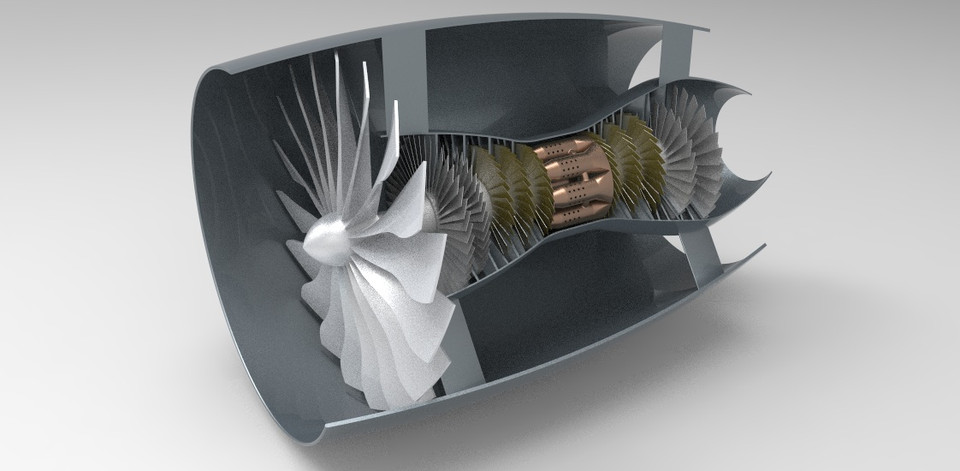
As jet-engine technology improved, a high-bypass turbofan was created (see: below).  The main fan on the front of modern aircraft, the one that you can see spinning from your seat at the gate, is actually just a very large propeller powered by a much smaller jet engine.  This fan pushes a large quantity of cold air bypassing the engine core to meet the hot jet of air at the rear where mixes before exiting the engine.  This advancement in technology allowed for significant gains in fuel efficiency especially at low
 altitudes.  The mixing of cold and hot air at the rear of the engine (think muffler) also lead to a much more quiet engine.  

Image result for high bypass turbofan

Boeing began to design upgrades to its 737 aircraft using high-bypass turbofan technology creating what would eventually be dubbed, the 737 Classic (Models -300, -400, -500).  Many of these are still being flown today by domestic carriers Southwest and Alaska.

One of the drawbacks of retrofitting the original design with new, large fan engines, was engineering around one of its key advantages, the short landing gear.  There just wasn't the ground clearance below the wing to fit the new engines without creating enough differences that the FAA would require a different set of pilots to fly the aircraft.  So, Boeing had its engine manufacturer move an accessory box from below the engine to the side, creating the unique, almost flat looking, engine.

Image result for 737

Inside the cockpit, the Classic model changed very little.  There was still overwhelming amount of round dials almost completely devoid of computer technology.  In its next upgrade, Boeing would update most of the cockpit.

When Boeing created the Next Generation, the models you are most likely to fly on today and the model I fly (-700, -800, -900), they overhauled much of the instrumentation in the cockpit.  Almost all of the round dials for engines and navigation were replaced by computer monitors.  The overhead panel, controlling much of the supporting systems (A/C, electrical, hydraulic), wasn't changed at all. This was intentionally omitted so a pilot qualified on one generation of 737 would be qualified on all, resulting in much lower training costs for customers, specifically Southwest Airlines which operated a large quantity of 737 Classic aircraft.

In terms of pure nostalgia, this outdated overhead panel is both work intensive and also neat.  It has some of the old 1960s era technology coupled with modern avionics.  For example, on the regional jet I flew that was designed in the late 90s, almost everything was done by computers.  After starting the engines, the checklists we ran just had us verify that everything transfered as normal.  The 737, not so much.  After starting the engines on this aircraft, I do the following:  transfer power from auxiliary power unit to each individual engine, turn on center tank fuel pumps if above a certain fuel quantity, turn on external probe heaters, turn on air-conditioning, turn on engine bleed valves, turn off auxiliary bleed, set isolation valve from open to auto, turn off auxiliary power unit, run systems test to check for errors, and finally adjust and verify A/C settings.

With this history term paper coming to an end, I have to say that I am happy with the aircraft I chose.  I fly longer legs and get to go to places countries in the Caribbean and South America.  If I'm lucky, maybe one day I'll get to fly one of the trips from the West Coast to Hawaii.  It's an aircraft I see myself staying on for awhile and I can't wait for what the future holds.


Wednesday, December 7, 2016

Training Day

With both hands planted firmly on the counter, I leaned over the hotel sink and stared blankly at the foggy mirror, trying to make out my own features in the milky haze.  Taking two deep breaths, I reached for a towel and cleared a narrow band on the mirror before bringing it to my face to wipe the beaded sweat from my upper lip.  There was still plenty of time to catch the 6:30 am shuttle to Delta World Headquarters and I needed that time to ease my nerves.  I had set 3 alarms on my cell phone in the unlikely, but terrifying event that I would oversleep.

In the slowly re-fogging mirror, I adjusted my tie and checked my face one last time for stray remnants of beard.  It wasn't more than a week ago that I sported a lumberjack worth of facial hair as my fiance (now wife), her family and I cruised our way to Alaska.  Today, though, was the first day of training at my new airline.  It had been a whirlwind of a month and I still couldn't believe that I was finally going to be a pilot at Delta Air Lines.

When I entered the lobby, I began to run into familiar faces.  There were 15 people in my interview group and most of them were hanging out by the front desk waiting for the bus.  Like the glacier several weeks before calving into the bay, seeing and chatting with these familiar faces helped to melt away my terrain-altering ice-mountain of nerves..  

When we walked into class, we were handed a schedule of events for the following two weeks of Indoctrination, the first of 6 phases of training.  I quickly glanced over the paper while the instructor started to talk.  "First things, first.  I'd like to be the first to officially welcome all of you to Delta Air Lines," the head of the New Hire Program started.  "Behind you we have coffee, fruit and pastries so please help yourselves.  Oh and before I forget, bring your bathing suit and a shirt tomorrow.  That'll be your pool day."  Once in a pilot's career at a major international carrier, he is required to engage in a water evacuation, inflate a raft and climb in from the water. Day 2 would be my day.

****

When we entered the training annex, it was immediately clear the commitment that was put into safety at Delta.  We walked by large rooms with small cutouts of emergency exit doors.  At one labeled A320, a flight attendant, strapped-in to a jumpseat was repeatedly barking the commands "BEND DOWN! STAY DOWN!" while an instructor stood nearby.  A red light flashed in the window and over a speaker, a fake announcement to evacuate was made.  The flight attendant, jumped out of her seat, opened the door and started to shout more commands before her instructor stopped her to give feedback.  

After we passed the doors rooms, we entered another large open room with four or five full-size cabin mock-ups.  It looked like someone had cut a real airplane into just a metal tube (painted and everything), installed it there and filled the room with concrete up to the door opening.  Walking by fake airplane doors , you could see what looked like an operable galley behind a row of seats.  In several of the trainers, you could hear instructors talking or flight attendants practicing evacuations and various other emergencies.  

We turned the corner and entered a two story room with two truncated aircraft cabins on hydraulic stilts.  We walked up the stairs and into the realistic looking cabin.  We were told to find a seat and buckle our seat belts.  "Alright, this will be your slide evacuation drill," one instructor informed us.  "The aircraft will move and eventually simulate a crash landing.  Listen to the flight attendants instructions."

It was eerily dark in the cabin.  The windows were black except for the occasional flash to simulate lightning.  Over the speaker, came a PA.  "This is the Captain.  Brace, Brace Brace."  Immediately, the flight attendants started yelling in unison.  "BRACE, BRACE, BRACE! HEAD DOWN!  STAY DOWN!"  Even though I knew this was a simulation, a chill ran up my spine and I couldn't help to bend over and brace for impact.  They repeated the phrase over and over until the cabin "crashed" with a thunderous jolt and tilted to one side.

The calm and collected, yet authoritative chanting from the flight attendants in the darkened cabin created an unsettling feeling in the pit of my stomach, one that I hoped to never feel again.  After another announcement from the Captain, the chant changed and we were instructed to get out of our seats, walk to the door, and jump off the edge of the aircraft falling the 15 feet to the ground via the exit slide.

A smoke generator started to fill the cabin with smoke the minute we "crash landed."  Once we were instructed to get up, I followed the beams of light piercing through the smoke to the open door at the back of the "aircraft." I looked out in the room and saw that the slide was almost pointed straight down.  It wasn't until around 5 feet below me did it start to flatten out.  Overcoming my crippling fear of heights, I jumped through the door and floated for a second or two before meeting the slide.  I reached the bottom of the slide and immediately jumped up, adrenaline pumping.  Where is the line to do that again?!  With that bit of fun complete, we debriefed the evacuation and left the room and moved on to our next drill.  

We then made our way to the pool.  The room housed a large, 7 foot deep pool about 30 meters long and at one end, an aircraft shell painted in Delta colors with a single door that would open over the pool. We were handed life vests as we walked into one side of the "aircraft" and had a seat.  Just like the evacuation drill from before, the flight attendants commanded an evacuation.  When I reached the door, I pulled the string on my life vest and it inflated in one single explosive gush of air.  I jumped away from the aircraft and into the pool.  After several seconds under water, my life vest brought me to the surface and I swam away from the aircraft with dozens of my classmates so that the rest of the 35 of us could safely evacuate the aircraft. 

Once we were all evacuated and floating in the pool, we partnered up and practiced several survival techniques.  We towed each other from one end of the pool to the other and practiced huddling to stay warm.  After several drills, two of the pilots were pulled out of the pool and back into the cabin to get the survival raft.  Not long after, they appeared in the doorway holding what appeared to be a stuffed body bag.  Sorry, I know it's a little morbid but I honestly have no other way of describing what it looked like.  They attached two of the strings dangling from the bag to loops at the base of the door and tossed it into the pool.  

There was a loud *CRACK* as the raft hit the water and began to violently morph.  The yellow bundle tossed and turned in the water as it rapidly inflated and after less than a minute assumed its final hexagonal shape as seen below (this isn't us).


Following the inscriptions on the side of the raft to the entrance, one by one we all climbed into the surprisingly large raft, assembled the canopy before being towed to the side of the pool where we were allowed to get out.  As one final task before lunch, we formed a single file line, exchanged our life vests for a seat cushion and jumped back into the pool to swim a circular lap using the seat cushion for flotation.  Surprisingly enough, the seat cushion provided plenty of buoyancy.  One-by-one, we climbed out of the pool and made our way to the cafeteria hoping this would be the last time we'd ever have to do anything like that.